Draft — for board & coach review

The BYSA Way Coaching Course

"We don't coach to win. We coach winning soccer."

Most coaches get handed practice plans — or go searching for them. BYSA hands its coaches something different: the game's Principles of Play, and a format-by-format Game Model — the formation, the style, what each season builds on — that every team is expected to follow up the Pathway. This course teaches the part in between — how. How kids actually learn, how to turn principles into a Tuesday practice with the players who actually show up, and how to keep a nine-year-old in love with the game.

Club level coaching at town level prices — this course is how we keep that promise.

Audience

Who it's for

One room, the whole Pathway. Safety, weather, playing time and the other universals are already covered for every coach in the online course — this is the next layer.

Grade 3/4 coaches

The core audience. 7v7 is the first rung where a volunteer designs and runs their own practices — the course's examples live here.

Any new travel coach — especially Grades 5/6

New coaches step in at 9v9 too, and they need the same foundation. The field examples run at 7v7; the method is the Pathway's, at every format.

Grade 1/2 coaches on the travel path

Travel coaches apply — the coaching director vets candidates and watches practices. For a Grade 1/2 parent thinking about applying when their kid reaches 3rd grade, this course is the on-ramp: see what the job actually is, with the town behind you.

In-town coaches (Grades 3–7)

The core sessions serve in-town too — with the emphasis shifted hard toward fun, not winning. Running up scores, not adjusting to the game in front of you, adult egos souring a kids' Saturday: these are live problems, and the course takes them head-on. (A dedicated in-town evening — "They Play for Fun" — is already drafted.)

It's also how we recruit. The hardest part of saying yes to volunteer coaching is fearing you'll be left alone with it. A real course, real materials, and a season of support make "yes" a much easier answer — for the coaches we currently have to talk into it.

Delivery

Not one long night — a season

A short core course plus follow-ups across the year, matched to our actual calendar: two 8–10 week seasons, two preseasons, a winter break.

Preseason (fall & spring)The core course: ~60 minutes in a classroom, ~60 minutes on the field.
In-seasonShort check-ins, in person or virtual: what's working, what's hard, one topic gone deeper.
Late springTimed to tryouts: "development is not a straight line" — for coaches, and for the parents they talk to.
WinterOptional deeper sessions for the coaches who want more.
Why this shape? It's honest about volunteers' time — and it practices what the course preaches. Nobody learns twelve things in one night. You learn a few, use them, come back, go deeper. We're teaching coaches the way we're asking them to teach kids. The ask in return: take it on a bit of faith for one season, then judge it against what you see. If we expect players to work between practices, coaches can expect the same of us — we'll be there all season.

The content

The whole course in ten sentences

Each message gets expanded live — some for two minutes, some for twenty — and most are already backed by a full video for anyone who wants the complete argument. Tap any message to open it.

1You're not coaching soccer — you're teaching it.

Everyone will hand you practice plans — the club, the internet, a book, an app. What to teach is everywhere. What nobody hands you is how: how kids actually learn, and how to get it from the page into their feet. That's the real job, and it's a teaching job. The good news — you don't need a teaching degree. You need a handful of moves, and you already do half of them by accident. We name them so you can do them on purpose.

2Your past is not a plan.

Three versions of the same trap. How you were coached: "it was good for me" isn't a reason to keep doing it 20–30 years later — teachers also smoked in the classroom back then, and we don't do that now. Where you learned the game: if you grew up inside it, nobody taught you — the street did, the TV did, pickup did. Our kids have no street. How well you played: playing and teaching are different skills — the best managers in the world were mostly average players. However you got here, these kids need a different way in.

Made in person — this one's a conversation, not a video
3Catch them being good — at full volume.

"Catch them being good" comes from David Baird's Scoreboard Soccer — the whole feedback philosophy in four words. Aim for five positives for every correction — not fake, specific: "great job getting your head up before that pass." Praise the brave attempt at the hard thing; correct quietly, often privately. And don't confuse positive with quiet: watch a professional training session — the coaches are yelling constantly, and it's a stream of urgency and standards, not a list of what's going wrong. Loud and positive are not opposites. Yell the standard, not the failure.

4If the drill diagram looks impressive, be suspicious.

Some drills in your feed need air traffic control to explain. If it takes you five minutes and two paragraphs to work out, a 4th grader has no chance. One field and a list of things to change beats a binder of choreography. Complexity photographs well; it doesn't coach well.
5More games, fewer lines.

A kid in a line is a kid not learning. Almost everything can be taught inside a game with one rule changed — and when a brand-new skill genuinely needs reps, two players working a skill back and forth is time well spent too. The test is never the furniture; it's touches per minute for the roster that actually showed up.

6Show them on purpose, then get out of the way.

When something is genuinely new — playing out of the back, how to restart — be explicit. Step by step, with the why attached. Being explicit isn't old-school; mindless barking is. Then fade: tell becomes ask becomes let-them-solve-it. Because the finished product isn't a kid who runs your script — it's a kid who makes good decisions at speed. The game has no timeouts and no play-calling. We're building decision-makers, not robots — and the most powerful question we own is "What did you see?" Train them to see the thing once, and it becomes apparent everywhere.

7They have to forget a little before they truly learn.

Don't hammer one thing and move on forever. After you teach something, loop it back in over the next three or four practices — a few minutes, and make them produce it rather than re-teaching it. The little struggle to re-find it is what makes it stick. That wobble isn't failure; it's the learning working.

how much they remember teach it once… and it drains away bring it back ↑ Tuesday: taught next practice the one after …it's theirs

Each gold dot is a few minutes of "show me again" at the next practice — not a re-teach. Every retrieval flattens the forgetting. (The science: Lemov's annotated forgetting curve →)

Video in production — the season-planning video covers the rhythm
8Give the parents something to cheer for — or they'll invent something.

The sideline is not optional — it's coaching your kids every Saturday whether you like it or not. The only question is whether it's amplifying you or contradicting you. One line in a weekly email — "we're passing back to our keeper on purpose this week; cheer when it works" — flips it to your side, and protects the hardest things we teach from the Saturday groan.

9Players are made between practices.

Do the math: two 90-minute practices a week, two 10-week seasons — about 60 hours a year. Nobody builds a player in 60 hours. But time with the ball works like compound interest, and two extra 15-minute sessions a week is the cheapest "club upgrade" a family can give a kid. You can't assign that time — you can only make them love the game enough to choose it. Get them watching a real match every week. When a kid shows up in a replica jersey, it's working.
10We don't coach to win. We coach winning soccer.

The kids already keep score — that job is covered. Yours is different: you're one layer of a Pathway that runs 4v4 to 7v7 to 9v9 to the full game, and the next coach is counting on what you build. You can't tell who "makes it" at eight, and you're not judged by Saturday. Teach the hard things, protect the love of the game, hand them up prepared. That's winning soccer.

Part 2

The field hour: one rectangle, never re-coned

The whole hour climbs a ladder on a single field. Each step changes one thing. Tap the steps — and notice the field never changes. That is the lesson: you don't need a drill library, you need one field and a list of things to change.

Coaches play a small-sided game. No coaching — on purpose.

The urgency demo

An exercise runs; the instructor says nothing. Then loud, positive urgency — and the room watches the tempo jump. Nobody was told they did anything wrong.

The four interventions

Flow · natural stoppage · a quiet word · the freeze — taught as a cost ladder. The freeze stops everything; spend it rarely.

Practical craft, woven in

Ropes for lines young brains can't imagine · big cones that stop corner-shaving · making the wide position a home, not exile · matching every activity to who actually showed up · warm-ups only where age requires them.

Demo players: coaches play the first half themselves — feeling a game from inside is the point. For the back half, an experienced BYSA team demonstrates the top rungs (this is the destination), with film showing what week one honestly looks like.

Take-home

What coaches keep

Two physical artifacts — mocked up below — plus the vocabulary sheet and the video shelf behind every message.

The Card — lives in the badge lanyard

  1. You're not coaching soccer — you're teaching it.
  2. Your past is not a plan.
  3. Catch them being good — at full volume.
  4. If the diagram looks impressive, be suspicious.
  5. More games, fewer lines.
  6. Show them on purpose, then get out of the way.
  7. They have to forget a little to truly learn.
  8. Give the parents something to cheer for.
  9. Players are made between practices.
  10. We don't coach to win. We coach winning soccer.
Back of card: key vocabulary + QR code to every resource

Laminated, badge-sized — in their hand at 5:30 on a Tuesday.

Four-Goal Game

From the games library · sample page

Set up
Your normal rectangle, two small goals on each end line instead of one.
What it teaches
Switching the field — when one side is crowded, the other goal is open. Kids discover it without being told.
Variations
Score only after a switch · add a neutral player · shrink one pair of goals.
Numbers: works 6–12. Fewer? Go 3v3, one goal per end. More? Two fields — never bigger teams.

One page per game: setup in a sentence, variations, and what to change for the roster you actually have. Built from our tested games — and yours: contributors get their name on their game.

Curious what the other artifacts look like? Peek at the , the , or the .

Feasibility

Most of this already exists

This is an assembly project more than a construction project. It also sits on top of the USSF and United Soccer Coaches courses — which we recommend and point coaches to — covering what they can't: our kids, our Pathway, our vocabulary, and the craft of teaching.

Already built

  • The Principles of Play — soccer's universal ten —
  • The BYSA Game Model, format by format (formation, style, season-on-season builds — 5 years running)
  • Skills & concepts progression, 4v4 → 11v11 —
  • Common Vocabulary sheet, with video links —
  • Grade 3 curriculum
  • Online universals course (safety, weather, playing time…)
  • Full video treatments for 8 of the 10 messages
  • PlayMetrics drill library — 40+ skills with slow-mo video & coaching points
  • Private BYSA coaches' channel with real game footage
  • At-home ball-mastery videos & skill challenges for families

To build

  • The lanyard card (design & print)
  • The games library (assembly, mostly from existing material + coach submissions)
  • The field-session run sheet
  • Two short videos (messages 3 and 7)
  • The season check-in calendar

Your turn

What we want from you

This is a draft, and the whole point of showing you is to make it better. Blunt is useful. Five questions, five minutes:

  1. Are these the right ten messages? What's missing — what wouldn't you miss?
  2. Would you attend the in-season check-ins? What would make them worth your evening?
  3. One combined session (~2 hours) or two shorter nights?
  4. What are your best games? (The best go in the library with your name on them.)
  5. Anything you'd push back on? Say it plainly — that conversation is the point.
Give your feedback →

Sample · Common VocabularyThe words every BYSA coach uses

We say…It means…From
"Find your shape"Look around and reset your position — you've bunched up; get back into the picture relative to your teammates.U8
"Play the way you're facing"It's easier to play in the direction your body faces. Receive on the back foot, open to the field — don't play blind.U10
"Go backwards to go forwards"A pass back often opens the forward pass. Don't charge alone into an outnumbered fight.U10
"Delay"Slow the attacker down without diving in, so teammates can recover behind you.U10
"Man on" / "Time"Danger on your back — or none. Teammates become each other's eyes.U10
"Pressure · Cover · Balance"First defender presses, second covers behind, third balances the far side. Defending is a team shape, not a chase.U8–U10
"Get paint on your shoes"Wide players: toes on the touchline. Make the field big.U8
And the flip side — what we ask instead of command
"Can you find the open player?""Kick it to Johnny!"
"Where is the best pass?""Send it!"

Sample rows. The full sheet covers ~25 terms — each with its meaning, the age we introduce it, and a link to a video showing how to teach it. A kid hears the same words from every coach, every year, up the whole Pathway.

Sample · Skills & Concepts, 4v4 → 11v11One thread at a time, growing up the Pathway

4v4
Gr 1–2
7v7
Gr 3–4
9v9
Gr 5–6
11v11
Gr 7+
Shape1-2-12-3-13-4-14-2-3-1
Playing outfrom goal kicksplaying outvs a pressvs a press
Beating a player1v1+ wall pass, up-back-through+ overlap, overloads+ reading the game
Defendingpressure, delay+ cover, press+ counter-press, setting trapsfull team defending
Ball skillsinstep pass, control+ weak foot, first-touch direction+ long pass, high balls+ curled pass, heading

Five threads shown; the full progression tracks ~30 across attacking, defending, and team play. Read any row left to right: nothing is taught in a vacuum — each format reuses what kids already own and adds one layer. This is why every coach is one layer of the same building.

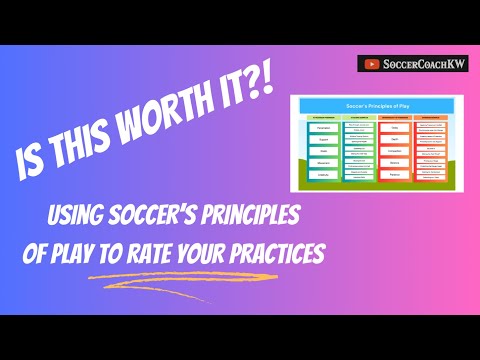
Sample · Principles of PlayTen ideas that govern every game

With the ball

  • Penetration — dribble, pass, or shoot forward
  • Support — angles and options for the ball
  • Width — make the field big
  • Movement — drag defenders, open space
  • Creativity — disguise and surprise

Without the ball

  • Delay — slow them down, don't dive in
  • Depth — layers of protection
  • Compaction — make the field small
  • Balance — cover the far side
  • Patience — wait for the moment

These ten are the game's own principles — every coaching book has a version of them. What's ours is the layer on top: the BYSA Game Model — format-by-format guides defining how our teams play them: the formation, the style, and what each season builds on. There's a full video series: the BYSA Principles of Play playlist → Every drill in the games library earns its place by serving at least one of these ten.